Brush · essential
Synthetic brush, 2 inch
Also sold as Nylon and polyester blend
The workhorse for water based paint. Synthetic filaments hold their spring in water, release paint evenly and wash out clean.
The Kit Room · 43 things, explained honestly
Brushes, roller sleeves, fillers, caulks, sealants and tapes. What each one is for, what it is not for, and the small things that separate a tidy job from a long weekend.
No brand names, no affiliate links. Just what we would lay on the bench for your job, and why.
Ask the bench
Tell us what you are working on and we will lay the right things out on the bench, with the reason for each. Change any answer and watch the list change.
The bench says
Wash, fill, spot prime the repairs, then two coats. Cut in first, roll while the edge is wet.
Synthetic brush, 2 inchBrush
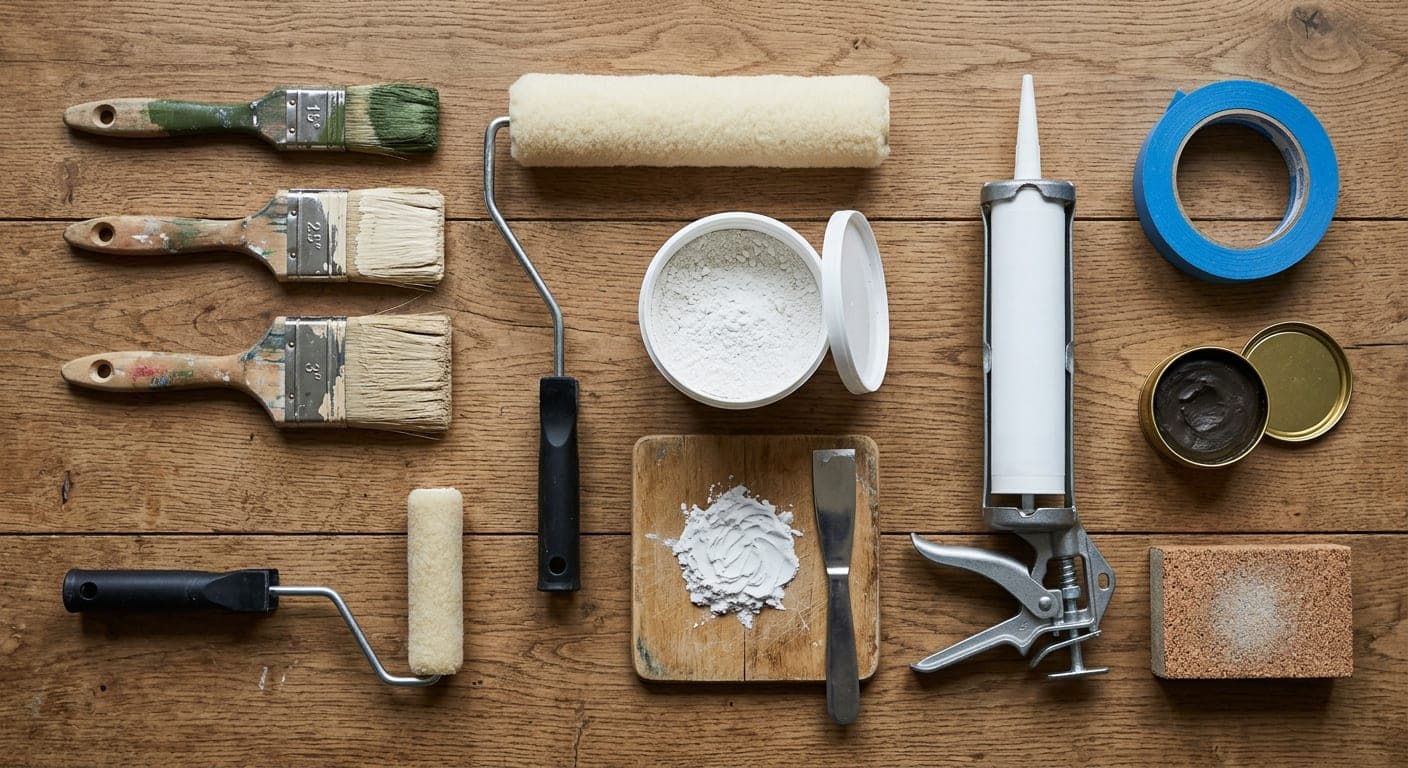
Cutting in walls and ceilings. Dampen the brush and flick it dry before dipping. Load the bottom third only, tap both sides inside the kettle and never wipe the rim.
Angled sash brush, 1.5 inchBrush
Sash window glazing bars. Hold it like a pencil, not a hammer. Move from the wrist and let the long side of the angle draw the line.
Dusting brushBrush
Every surface, immediately before painting. Dust, then wipe with a barely damp cloth, then paint. Most rough finishes are dust trapped under the coat, not the paint.
Medium pile sleeve, 9 to 12 mmRoller
Emulsion on walls and ceilings. Before first use, wrap the sleeve in masking tape and peel it off to lift loose lint. Then roll a W, fill it in, and lay off lightly in one direction from ceiling to floor.
Extension poleRoller
All ceilings. A short pole, about 60 cm, is the most useful length in a normal room. Long poles are for stairwells.
Low tack masking tapeTape
Masking against paint less than a fortnight old. Press the edge down with a filling knife, paint a first coat of the base colour along the tape to seal it, then your line colour. That is how you get a knife edge line.
Sugar soapBench
Every previously painted surface before repainting. Wash from the bottom up so dirty runs do not streak the clean wall, then rinse from the top down.
Paint kettle and scuttleBench
Every job. Line the kettle with a plastic liner or a freezer bag. Change the liner, not the kettle, between colours.
Cotton twill dust sheetsBench
Floors and furniture in every room. Fold them paint side in when you finish and they last for years. Shake them outside, never in the room you have just painted.
Seven rules of the bench
Nearly every failed finish we are asked to look at broke one of these.
Decorators caulk goes black and soft in a bathroom. Silicone will not hold paint. Read the tube, not the shelf label.
Synthetic for water based. Natural bristle for oil. A natural brush in emulsion goes floppy in an hour; a synthetic in gloss drags.
Short pile on doors, medium on plaster, long on render. The wrong pile is the difference between a finish and a texture.
Shallow and still: fine surface. Deep and still: powder. Moving: flexible. Outside: two part or masonry. Old lime walls: lime.
Cement, gypsum and plastic paint on a lime built wall trap moisture and push the surrounding lime off within a few winters.
Wash, rinse, dust, then paint. Rake out failed sealant to bare material before the new bead goes in.
Paint over uncured caulk crazes as the caulk shrinks. Bare filler drinks paint and flashes. Spot prime every repair.
The shelves · 43 items
Every item says what it is for, what it is not for, and one thing we wish someone had told us sooner. Cost bands are a guide to what a good one costs, not the cheapest one.
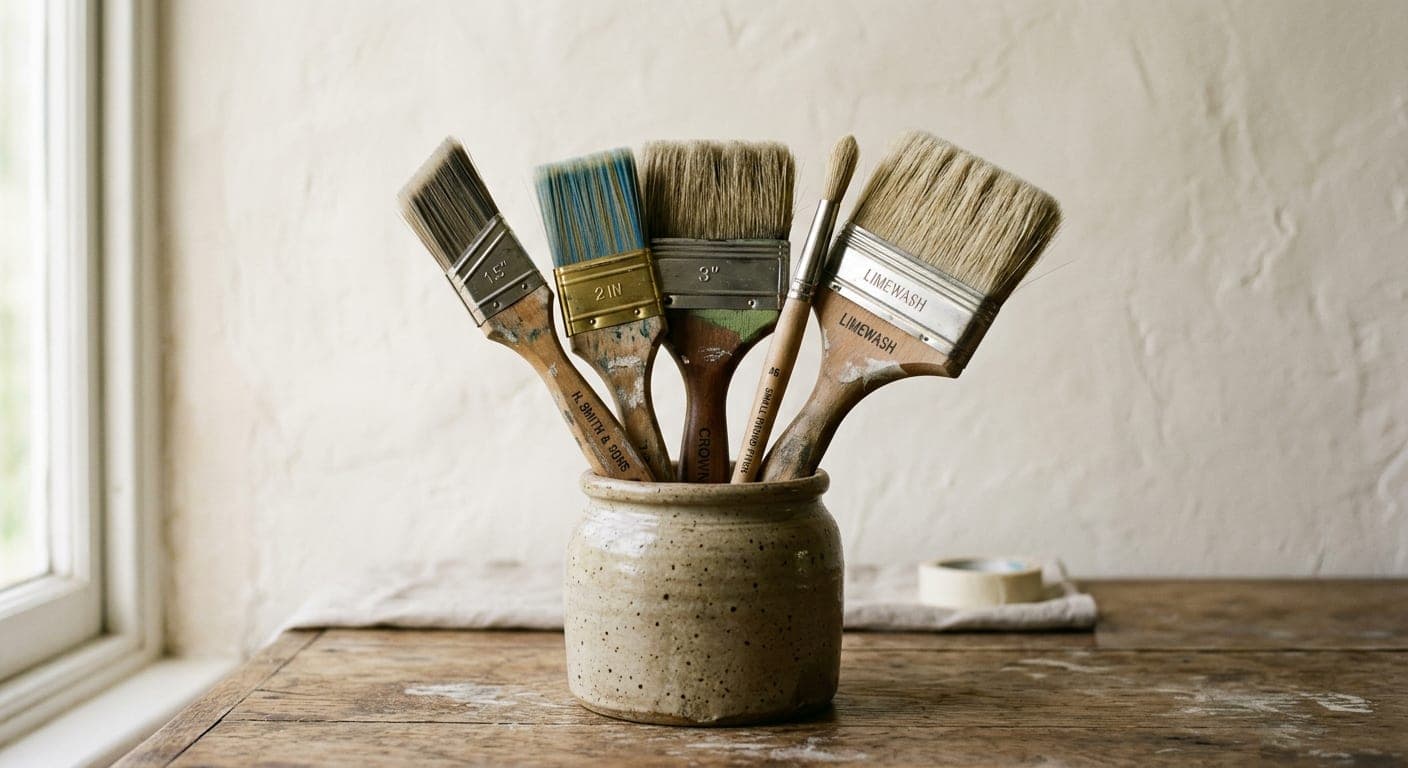
8 on this shelf
A good brush lasts years and gets better. Buy fewer, buy well, wash them properly.
Brush · essential
Also sold as Nylon and polyester blend
The workhorse for water based paint. Synthetic filaments hold their spring in water, release paint evenly and wash out clean.
Brush · essential
Also sold as Cutting in brush
A slim, angled synthetic that steers around glazing bars, corners and the line where wall meets ceiling.
Brush
Also sold as China bristle, pure bristle
Hog bristle with split ends that carry oil paint beautifully and lay it off with a soft, glassy finish.
Brush
Also sold as Large soft masonry brush, 5 to 7 inch
A wide, soft head of natural or mixed fibre that holds a lot of thin wash and lets you work it into a textured wall in every direction.
Brush
A stiff, dense brush with long filaments for forcing thick masonry paint into rough render, pebbledash and blockwork.
Brush
Also sold as Artist’s flat or round, half inch
A tiny long handled brush for the places a sash brush is too big.
Brush
Also sold as Crevice brush
A small head on a long bent handle for reaching behind radiators and pipes without taking them off the wall.
Brush · essential
A soft wide brush used dry, to clear sanding dust from mouldings and corners before paint goes anywhere near them.
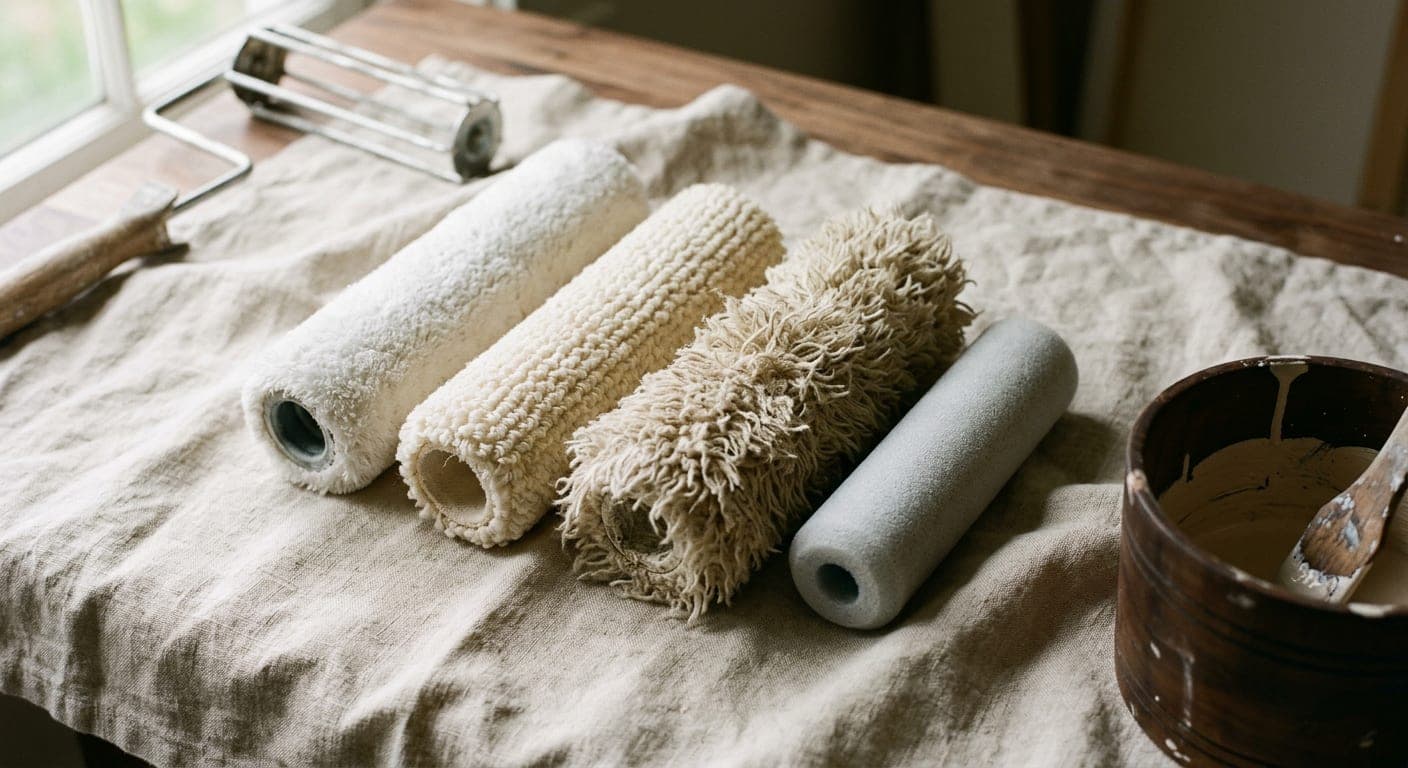
6 on this shelf
The sleeve decides the finish. The frame just holds it. Match pile length to the surface and fibre to the paint.
Roller · essential
Also sold as Woven polyester or microfibre
The everyday sleeve for emulsion on plastered walls and ceilings. Holds plenty of paint and leaves a light, even texture.
Roller
Also sold as Fine finish, flock or microfibre
A dense, low pile that holds less paint but leaves almost no texture. The sleeve for anything you will look at closely.
Roller
Also sold as Masonry sleeve, lambswool
Deep, open fibres that carry a heavy load of thick paint down into the hollows of render and pebbledash.
Roller · essential
A small sleeve on a short cage for doors, panels, reveals and behind radiators. Available in every pile.
Roller
Also sold as High density foam
Closed cell foam that gives a very smooth finish with oil based gloss on flat surfaces, but traps air in thicker water based paints.
Roller · essential
A telescopic pole that threads into the roller handle. Ceilings from the floor, walls without a ladder, and far better leverage for an even coat.
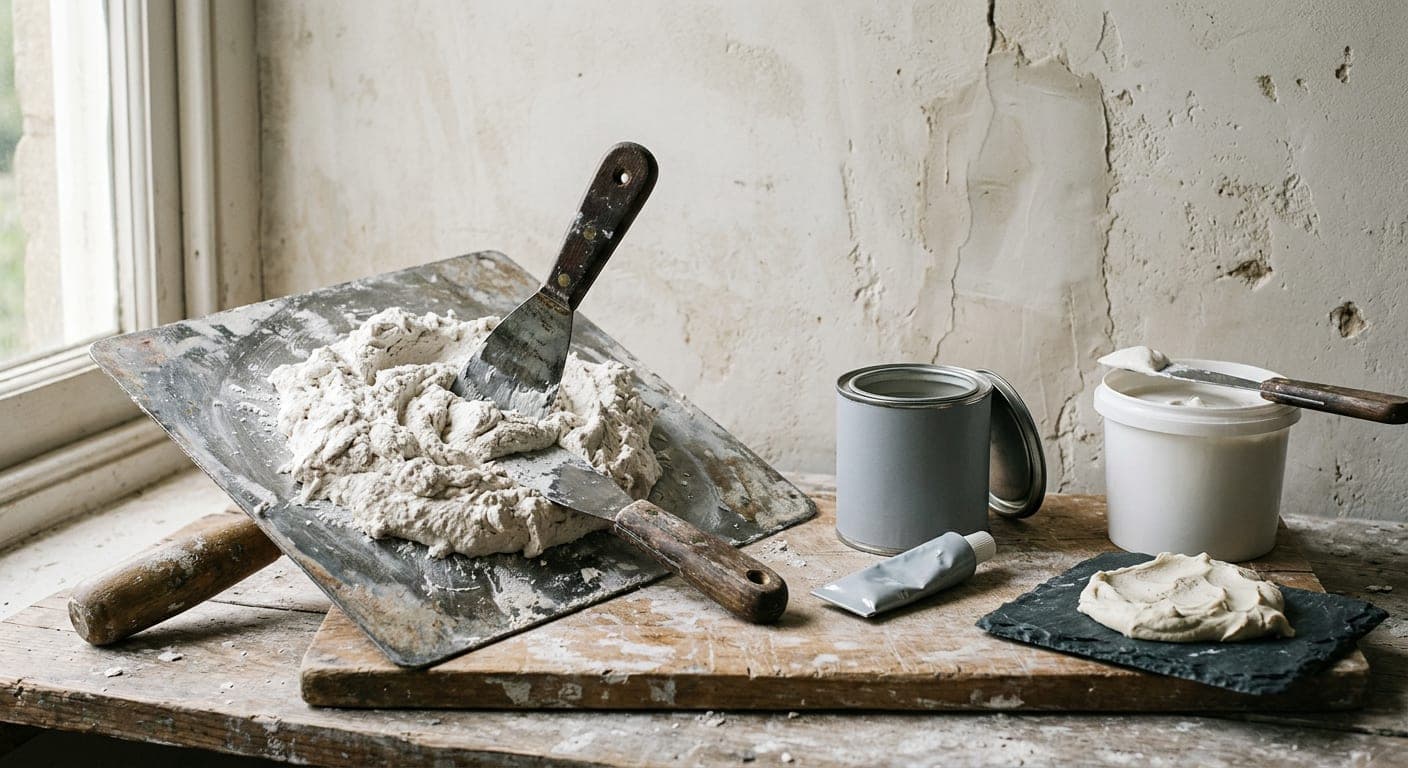
9 on this shelf
No filler is right for everything. Choose by how deep the hole is, whether it moves, and whether it lives outside.
Filler · essential
Also sold as Mix your own, bag or box
Gypsum based powder you mix with water. Strong, sands to a feather edge and can be built up in layers for deeper holes.
Filler
Also sold as Quick drying, tub filler
A whipped, airy filler that dries in minutes with almost no shrinkage. Convenient for small dents and last minute touch ups.
Filler
Also sold as Skim filler, finishing filler
A smooth, creamy filler with very fine grain for hairline cracks and shallow imperfections, applied thin with a wide blade.
Filler
Also sold as Fibre reinforced, elastic filler
A filler with enough give to stretch across cracks that open and close as the house heats, cools and dries.
Filler · essential
Also sold as Polyester filler, 2K filler
A resin paste mixed with a small amount of hardener that sets rock hard in ten minutes, sands like timber and shrugs off weather.
Filler
Also sold as Resin repair, consolidant and paste
A liquid consolidant that soaks into softened timber and hardens it, followed by a flexible epoxy paste that moves with the wood. The proper way to save a sash bottom rail.
Filler
A cement or polymer filler that cures hard and weatherproof, for chips and cracks in modern render, concrete and blockwork.
Filler
Also sold as Fat lime, NHL 2 or 3.5
The original filler for old solid walls. Sets slowly by absorbing carbon dioxide, stays soft enough to breathe and to move with the building.
Filler
For repairs too deep or wide for filler. Bonding fills the depth in one go, finishing plaster gives the skim.
7 on this shelf
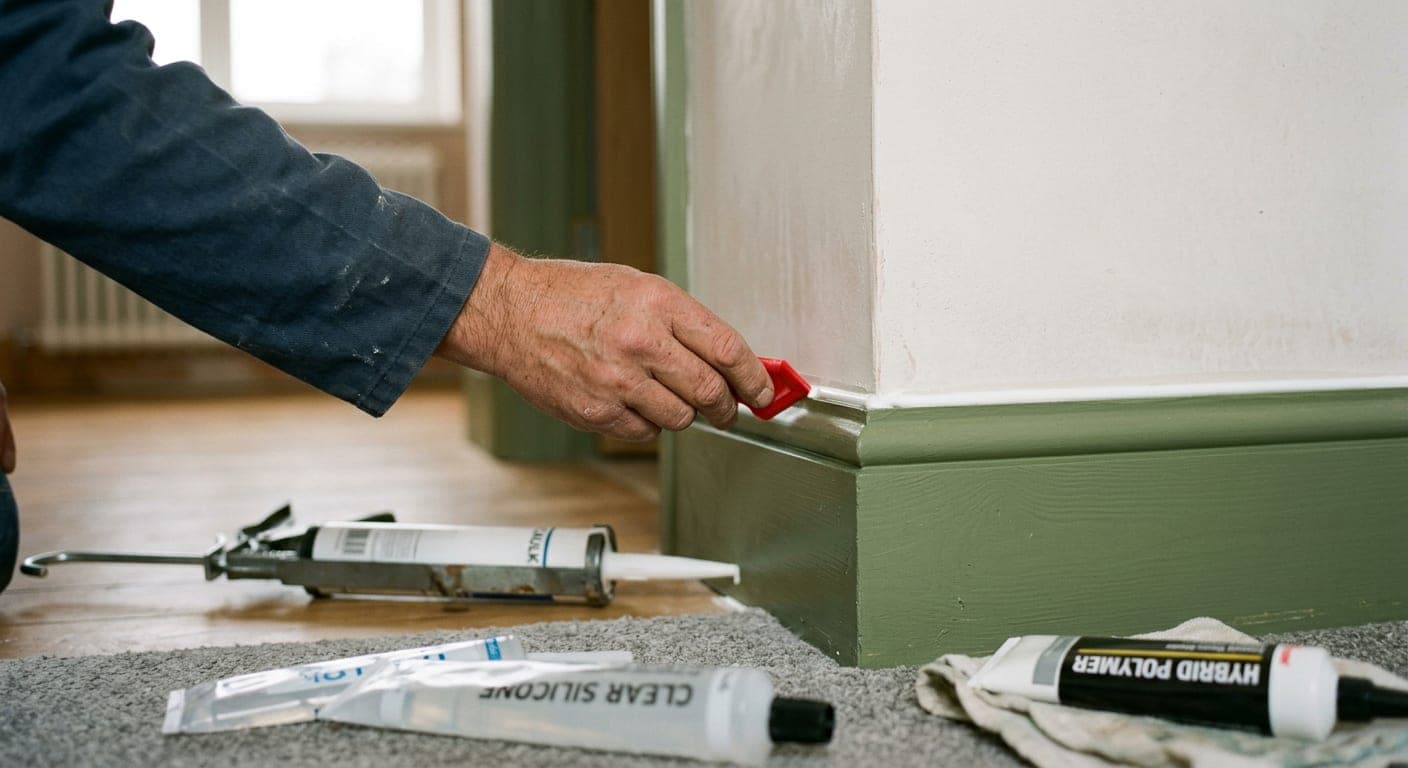
Caulk is for gaps you will paint. Sealant is for gaps that get wet. Mixing those two up causes most of the failures we see.
Sealant · essential
Also sold as Acrylic caulk, painter’s caulk
A water based acrylic filler in a cartridge. Skins in half an hour, takes paint, stays slightly flexible and wipes off with a damp cloth while wet.
Sealant · essential
Also sold as Sanitary silicone, low modulus
A rubbery, permanently waterproof sealant that stretches with movement and resists mould. Cannot be painted and nothing sticks to it afterwards.
Sealant
Also sold as MS polymer, all in one sealant and adhesive
A modern sealant that combines the waterproofing of silicone with the paintability of caulk, sticks to almost any surface and stays flexible for decades.
Sealant
Also sold as Weatherproof acrylic frame sealant
A paintable exterior grade acrylic for the joint between frames and masonry. Cheaper than hybrid polymer, less durable, fine under a well kept paint film.
Sealant
Also sold as Glazing putty
Whiting and linseed oil, kneaded to a dough. The traditional bedding and facing for glass in timber sashes. Slow, forgiving and repairable for a century.
Sealant
Also sold as PU foam
A polyurethane foam that swells to fill large voids around pipes, frames and cable runs. It is a backing, never a finish.
Sealant
Also sold as Intumescent acrylic
A sealant that swells under heat to close gaps where pipes and cables pass through walls and ceilings between flats or from a garage.
4 on this shelf
Tape is a tool for clean lines, not a substitute for a steady hand. The wrong tape pulls fresh paint off.
Tape · essential
Also sold as Delicate surface tape, purple or yellow
A gentle adhesive that comes off fresh paint and wallpaper without lifting either.
Tape
Also sold as Beige crepe tape
The everyday tape for glass, hardware and well cured surfaces. Strong enough to hold, cheap enough to use freely.
Tape
Also sold as Outdoor masking tape, blue or green
A tape with adhesive that survives sun, damp and temperature swings for a week or more without baking on or falling off.
Tape
Also sold as Drop film, tape and drape
A roll of thin polythene with tape along one edge. Unrolls to cover a window, a kitchen unit or a whole wall in seconds.
9 on this shelf
The unglamorous things that make the difference between a tidy job and a long weekend.
Bench · essential
Flexible steel blades for applying and smoothing filler. The 2 inch for holes, the 4 for cracks, the 6 for skim fills and feathering edges.
Bench · essential
Also sold as Skeleton gun, caulking gun
The gun pushes a steady bead; the profile tool shapes it. Buy a gun with a pressure release or every bead ends with a blob.
Bench · essential
Also sold as Degreaser, surface cleaner
An alkaline cleaner that lifts grease, nicotine and handling marks so the new paint has something clean to grip.
Bench · essential
Foam backed abrasive that follows mouldings and curves, alongside sheets for flat work. Grit choice is its own guide.
Bench
A sticky, resin impregnated cloth that picks up the last of the dust a brush leaves behind.
Bench · essential
A kettle is a small pot you decant into, so the tin stays clean and you carry less weight. A scuttle is a deep tray for loading rollers from a pole.
Bench · essential
Heavy cotton that stays put, absorbs drips and does not slide underfoot like polythene.
Bench
A stiff bladed scraper for lifting flaking paint and a shave hook with shaped edges for cleaning paint out of mouldings.
Bench
A comb clears dried paint from the heel of the bristles; a keeper stores brushes suspended in a little solvent or water so they never dry stiff.
Asked at the counter
Before you buy anything
The paint calculator tells you how many tins and roughly what they cost. Painting Weather tells you whether this week is worth starting outside. Both are free and neither asks for your email.
One tool, one material or one repair explained in every letter, in this same plain style.