Your first room
A good place to begin. Work through the basics in order.
The Education Room · freely shared
The right sandpaper. The right paint. The reason behind each step. Practical decorating knowledge for anyone who wants to do a better job.
Read or listen, in your own time. Every guide has a gentle audio version, and all of it is freely shared. No account, email address or purchase required.
The knowledge library
Tools, guides and references in one place. Start with a question or choose a subject.
6 results in Paint problems
Use a photograph for an initial suggestion, not a survey.
Compare symptoms, possible causes and the order of repair.
Common painting claims, with the practical reasons behind the advice.
Understand adhesion, curing and why a coating fails.
Recognise the limits of a visual check and deal with moisture before it returns through a new finish.
Work backwards from the symptom instead of trying to bury it beneath another coat.
The guide library · 27 guides · read or listen
Six chapters, in the order a job actually happens. Start with a question, or read straight through like a book.
Showing 27 of 27 guides.
Before the lid comes off. What to buy, what to check and how to work safely.
9 guides
Nine tenths of the job. Sanding, filling, priming and the patience in between.
4 guides
What is in the tin, what it does on the wall and how to choose between them.
2 guides
Cutting in, laying off, rolling a wall. The hand skills, explained slowly.
5 guides
Lime, stone, salt air and sash windows. Read the building before you paint it.
5 guides
When paint fails. Why it happened, what to do about it and when to call.
2 guides
Four reference rooms
The guides tell you how. These rooms tell you what. What each brush, paint, defect and word actually is.
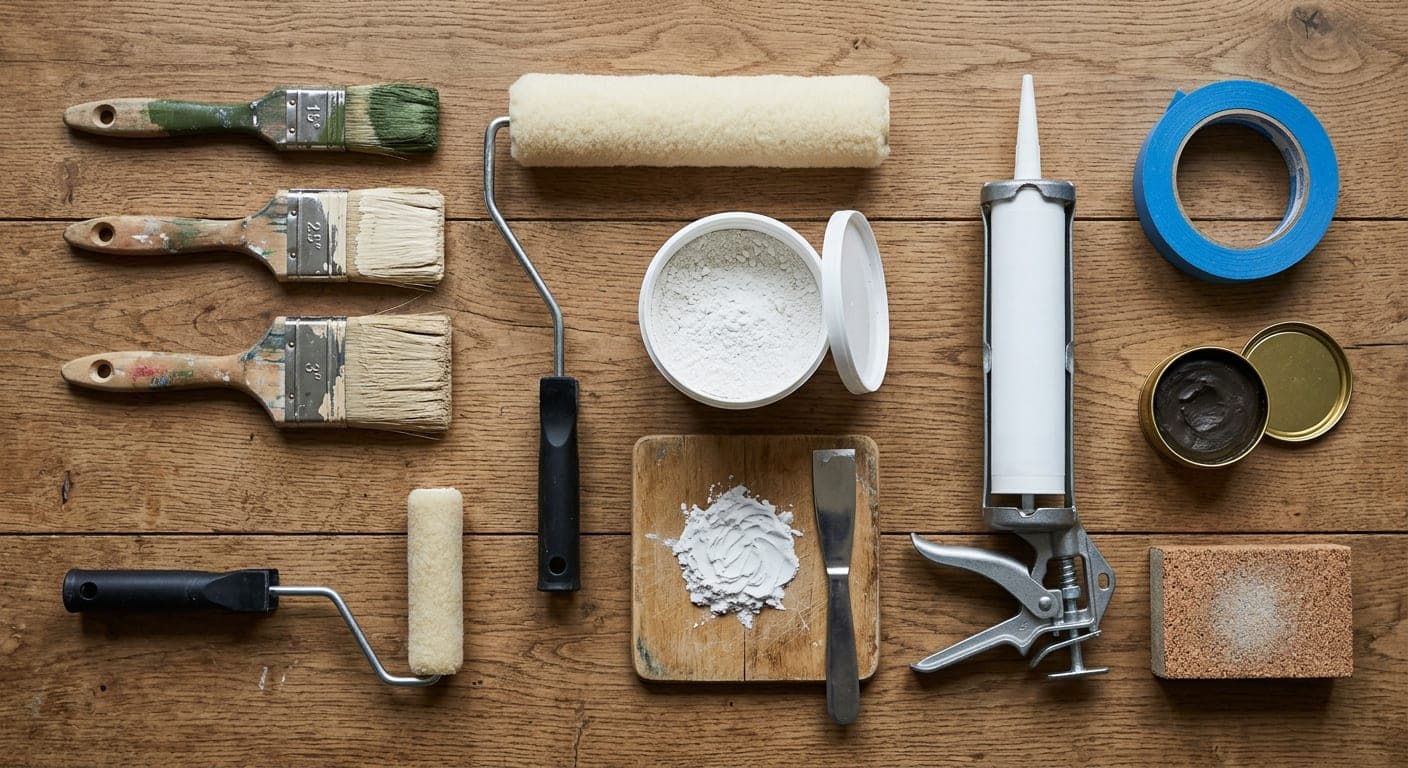 Tools & materialsForty odd itemsThe Kit RoomWhich brush, which sleeve, which filler, which tube. Each thing on the bench explained by what it is for and what it is not for. Answer three questions and it lays out the kit for your job.Open the Kit Room
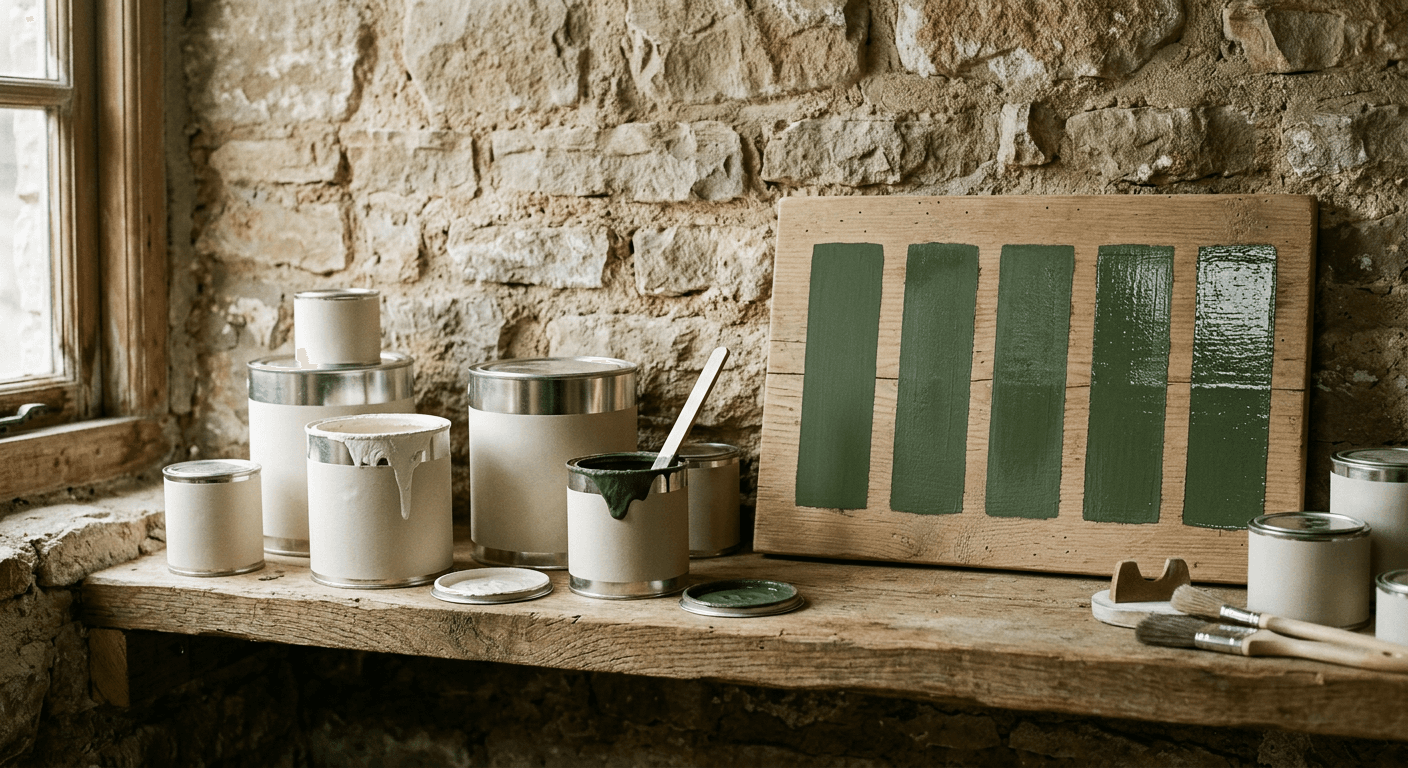 Paint types & sheenThe Paint ShelfEvery paint type explained, a sheen scale, and which paint on which surface.
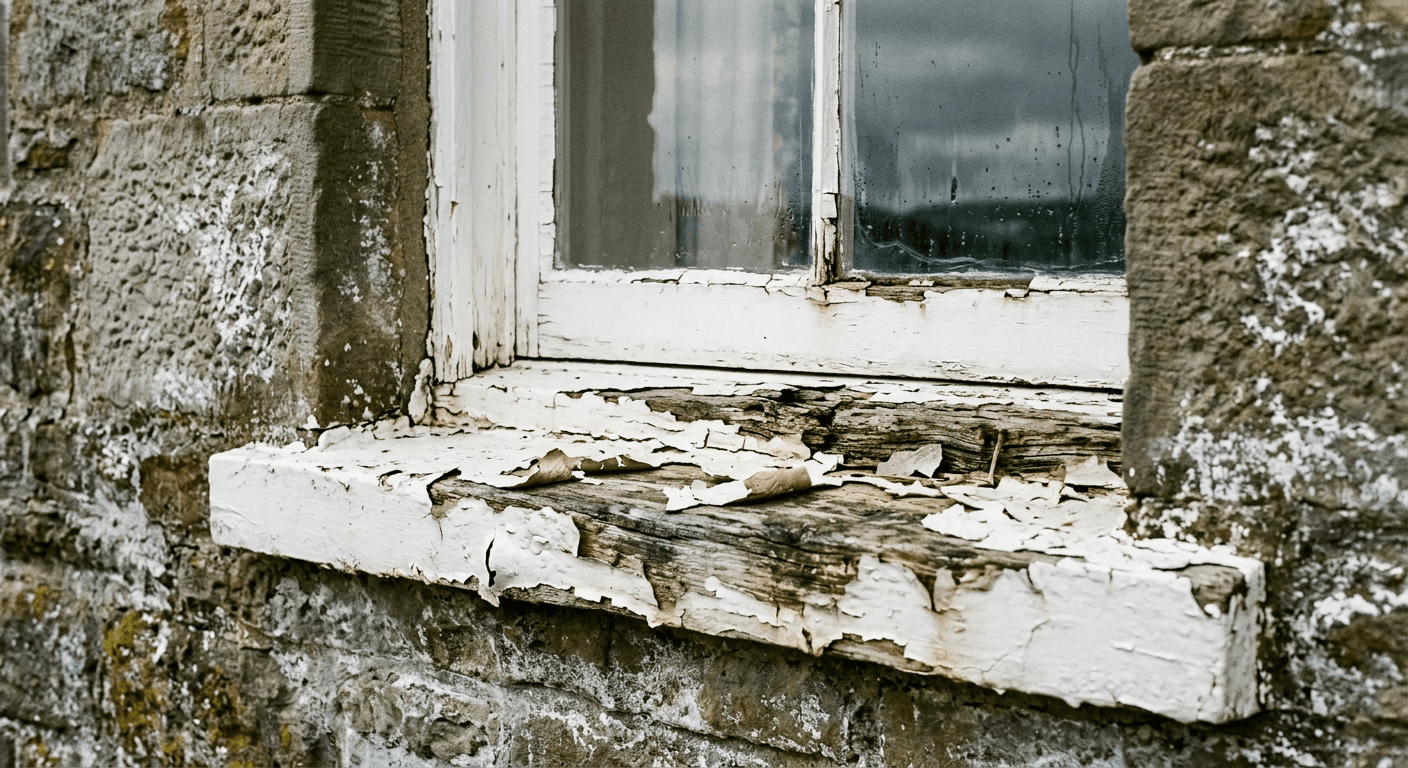 Nineteen failuresDefects EncyclopaediaWays paint fails, photographed, with cause, fix and whether to call.
Five planning tools
Each one answers a single question you will have before a job. None of them ask for an email address.
Three reading orders
Four guides each, in the order that makes sense. About forty minutes of reading, or listening while you clear the room.
A good place to begin. Work through the basics in order.
Understand the preparation beneath a smooth, lasting surface.
Read the building before deciding what to put on it.
Keep this to hand
Bigger number, finer abrasive. The aim is a sound, even surface, not removing as much as possible.
Never sand unknown old paint or textured coatings. Establish that the material is safe before disturbing it.
Read the complete guide Looking for the paint finish reference?| Grade | Typical job | What to watch |
|---|---|---|
| P80 to P100 | Initial shaping of suitable bare timber or hard filler | Coarse scratches can show through paint. Not a default for plaster or old paint. |
| P120 to P150 | Refining timber and levelling suitable dry repairs | Use a block on flat repairs. Keep edges and mouldings intact. |
| P180 | Fine preparation of sound painted woodwork | Aim for a uniformly dull surface, not complete removal. |
| P220 to P240 | Light denibbing between compatible, sufficiently dry coats | Use only where the product permits sanding. Do not polish the surface. |
Learn by watching
Popular tutorials from independent creators. Useful companions to the written guides, with the credit where it belongs.
A popular starting point for seeing a room painting project explained. Use the written guides here for UK surface and product checks.
Home RenoVision DIYAbout 10.2 million views when checked
Watch on YouTube (opens in a new tab)A focused tutorial on cutting in at ceilings. Practise on a sample board before working along a finished ceiling.
Paint Life TVAbout 1 million views when checked
Watch on YouTube (opens in a new tab)A room painting demonstration from the home improvement series. American paint names and building details may differ from your home.
This Old HouseAbout 964,000 views when checked
Watch on YouTube (opens in a new tab)A UK tutorial to accompany the plaster guide. Always take drying and dilution instructions from your current paint manufacturer.
Charlie DIYteAbout 782,000 views when checked
Watch on YouTube (opens in a new tab)This is a selected watch list, not a ranking of all YouTube videos. Titles, channels and approximate view counts were checked on 25 September 2026. Views change. Videos belong to their creators; inclusion does not imply endorsement of Aethos. Our written guides are original general guidance, not video transcripts. Product instructions and current UK safety guidance take priority. Videos open on YouTube; no embedded player loads on this page.
Knowledge is worth sharing
Knowing when to call someone is part of doing a good job. If your St Andrews or Fife home needs a closer look, I am happy to talk it through.