Aethos

Education sessions · we teach

Fifteen years on the tools,
shared around a workbench.

Practical sessions on paints, materials and methods. Taught with real surfaces, real tools and the reasons behind every step.

Fifteen years of renovating commercial and domestic properties has taught me that most paint failures are decided long before the lid comes off. These sessions pass that on, so you can choose better, prepare better and know when to call someone in.

A clear starting point

Know what you are booking.

Start with a short enquiry. I confirm the scope, duration, fee and available dates in writing before you decide. An enquiry is not a paid booking.

A practical decorating session

Format
One to one, a small group or a property team, at a suitable agreed location.
Agreed scope
One starting subject, matched to your experience, with time for demonstration and supervised practice.
What you receive
Practice on the agreed surfaces or panels, feedback on technique and a recap of the methods covered.
Quotation basis
Quoted for the subject, attendees, location and duration. Tools, materials, protective equipment and venue costs are listed explicitly.
Duration and delivery
Session length, date, accessibility needs and what to bring are agreed before booking. This is practical education, not an accredited qualification.
Enquire about a practical session

Property visits cover St Andrews, East Neuk, Fife, Dundee and Angus, subject to travel and availability. Remote consultancy depends on whether your question can reasonably be answered from the information supplied. Payment and cancellation terms are provided with the quotation.

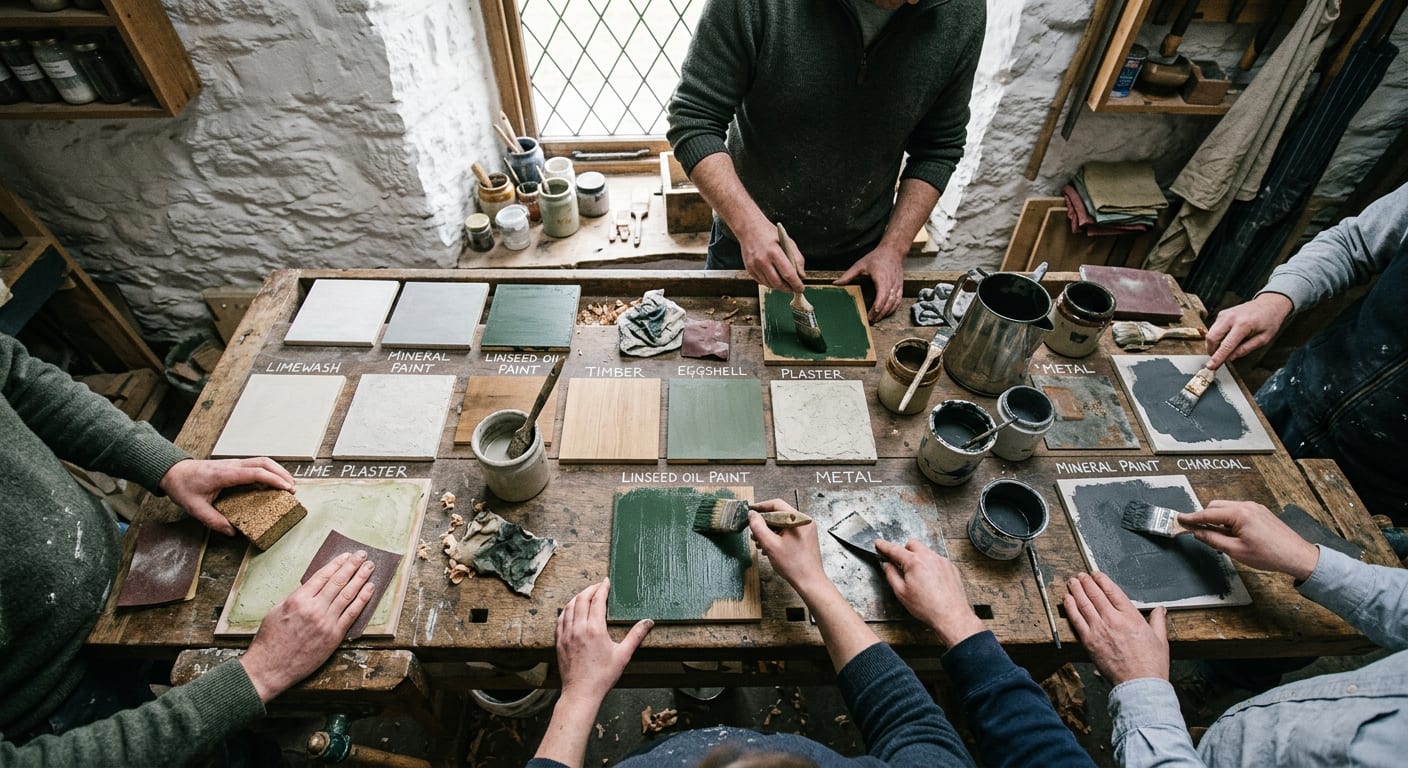
Several pairs of hands with brushes and sanding blocks working on labelled test panels of limewash, mineral paint and oil paint on a timber workbench
Illustrative teaching scene, not a photograph of a past session.

The specimen board

Seven materials.
Seven ways to get it wrong.

A taste of what the sessions cover. Choose a material to see what it is, where it belongs and the mistake I see most often on site.

Specimen 1 of 7 · Traditional mineral

Limewash

  • Lime plaster
  • Lime render
  • Stone
What it is
Lime putty thinned with water and pigmented. It hardens slowly by absorbing carbon dioxide from the air, returning to a form of limestone on the wall.
Where it belongs
Traditional lime plaster and render, stone and older masonry where the wall needs to release moisture freely.
Where it goes wrong
Applied over modern acrylic paint, in hot sun or frost, or in thick coats. It needs several thin coats and the right conditions to cure.
What we practise
Mixing, dampening the surface, applying thin coats and understanding why it looks patchy before it cures.

These notes explain typical uses, not a specification for your property. Product formulations vary. Check the current manufacturer’s technical and safety data, substrate compatibility, preparation, ventilation and drying conditions. Do not sand or disturb suspect lead paint or asbestos. Arrange appropriate assessment first.

The curriculum · published in the open

Six modules.
Nothing held back.

The full path from first tin to confident specification, published in the open. Read it in order, do the practical at each stage on a real surface, and come to a session when you want a pair of experienced eyes on your work.

Module 01

Reading a surface

What am I actually painting?

You will be able to

  • Tell lime, gypsum, cement and plasterboard apart with a scraper and a bottle of vinegar
  • Count and identify existing paint layers
  • Spot moisture, salts and movement before they spoil a finish
  • Decide when to stop and call a builder instead of a painter

The practical

Scrape and test three surfaces in your own home and write a one line diagnosis for each.

Breathable paint for old Scottish houses

Module 02

Preparation that lasts

Why does most paint fail before the lid comes off?

You will be able to

  • Wash, sand, fill and spot prime in the right order
  • Choose fillers by movement and depth, not by what is in the cupboard
  • Cut in a straight line without tape
  • Protect a lived in room properly in twenty minutes

The practical

Prepare one door and one metre of wall to a standard you would pay for.

The Kit Room: fillers, caulks and brushes explained

Module 03

Paint, demystified

What is in the tin and why does the price vary fivefold?

You will be able to

  • Understand binder, pigment and solids and what they do to coverage and durability
  • Read a data sheet: coverage, Sd value, recoat, minimum temperature
  • Match sheen to room and wear
  • Know which premium paints earn their price and which are a label

The practical

Brush out four paints on one board and compare opacity, flow and finish after a week.

Paint calculator

Module 04

Woodwork and windows

How do I get a finish on timber that survives a Scottish winter?

You will be able to

  • Prime bare timber and stop knots properly
  • Lay off eggshell and gloss without brush marks
  • Paint a sash window so it still opens
  • Rescue weathered exterior joinery before it needs replacing

The practical

One sash or one panelled door, from bare patches to two topcoats.

Maintaining and painting sash windows

Module 05

Outside, with the weather

When is it safe to paint a wall, and which paint belongs on it?

You will be able to

  • Use dew point, humidity and drying windows to pick the day
  • Choose between limewash, silicate and masonry paint for a given wall
  • Handle harl, sandstone and previously painted render
  • Set up an inspection cycle so exterior paint never fails all at once

The practical

Run a three panel test on your worst elevation and read it after a month of weather.

Painting weather tool

Module 06

Colour and specification

How do I choose, and how do I write it down so it gets done?

You will be able to

  • Test colour in the actual room light rather than on a chip
  • Build a palette that survives north light and warm bulbs
  • Write a specification a decorator can price from
  • Judge a quote and a finished job against a written standard

The practical

Write a one page specification for one room, including preparation, products and coats.

The Aethos Standard

The open workshop

One Saturday a month.
Eight people, one bench.

A standing morning around the workbench for anyone who wants to get better at their own decorating. Each month takes one module from the curriculum and works through it with real surfaces, real tools and time for your own questions and photographs.

When
One Saturday morning a month, St Andrews
Length
Three hours
Places
Eight places
Cost
Pay what the morning was worth to you, suggested £45

Included

  • All materials, boards and tools for the morning
  • A printed one page summary to take home
  • Photographs of your own problem walls looked at in the room
  • Tea, and a straight answer to whether you should do the job yourself

How it works

  1. 1Request a place below and confirm your email.
  2. 2We reply personally with the next date, the module and how to pay.
  3. 3Places are confirmed in the order requests arrive. If the month is full you go to the front of the next one.
  4. 4If you cannot make it, tell us and the place goes to the next person on the list.

Request a place

Tell us what you are working on. We reply personally with the next date. No card details, nothing is charged online.

What would you like to learn?

A request for a place at the next monthly open workshop in St Andrews. We confirm every place personally by email.

The sessions

Choose a subject.
Or build your own.

Each session is shaped around the people in the room and the buildings they care for. Subjects can be combined, and the content is agreed with you before we meet.

Paint, demystified

What is actually in the tin, why two products with the same finish name behave differently, and how to read a data sheet before you buy.

We cover

  • Binders, pigments and solvents
  • Water based and solvent based systems
  • Matt, eggshell, satin and gloss explained
  • Primers, undercoats and why they matter
  • Reading a technical data sheet

You practise

Compare products side by side on real test panels and see how sheen, coverage and drying differ.

Suited to

Homeowners starting their first decorating project and anyone who wants to stop guessing in the paint aisle.

Ask about this session

Preparation, properly

The part of the job that decides whether a finish lasts. Filling, sanding, cleaning and keying, done in the right order with the right materials.

We cover

  • Assessing a surface before touching it
  • Fillers, caulk and when to use each
  • Abrasive grades and sanding technique
  • Cleaning, degreasing and keying
  • Knowing when old paint must not be disturbed

You practise

Repair and prepare damaged sample boards, then see how the finish reveals every shortcut.

Suited to

Anyone who has watched paint crack or peel and wants to understand why.

Ask about this session

Old buildings and breathable materials

Why solid stone walls and lime plaster need to release moisture, and how the wrong modern coating can quietly cause damage over years.

We cover

  • How traditional walls manage moisture
  • Limewash, mineral paint and linseed oil paint
  • Lime plaster and its repair
  • Sandstone and harled exteriors
  • Choosing compatible systems for older homes

You practise

Handle lime, mineral and oil based materials and apply them to traditional substrates.

Suited to

Owners of period, listed and coastal properties across Fife and the east coast.

Ask about this session

Woodwork, sashes and doors

Brush control, laying off and the sequence that gives painted joinery a clean, durable finish without runs, drags or sticking sashes.

We cover

  • Brush choice, loading and laying off
  • Painting panelled doors in the right order
  • Sash window preparation and painting
  • Knotting, priming and bare timber
  • Exterior timber in coastal conditions

You practise

Paint door and sash sections under guidance, with feedback on technique as you work.

Suited to

Confident beginners and keen DIY decorators ready to improve their finish.

Ask about this session

Colour, light and room planning

How orientation, sheen and surrounding materials change a colour, and how to plan a palette that works across a whole home.

We cover

  • North, south, east and west light
  • Undertones and why colours shift
  • Sheen and how it changes perception
  • Painting and using sample boards
  • Connecting rooms into one palette

You practise

Build and test your own sample boards and compare them under different light.

Suited to

Anyone planning a redecoration who wants to choose colours with more confidence.

Ask about this session

Maintaining commercial and rented property

Durable systems, sensible maintenance cycles and how to write a decorating brief that contractors can price fairly and deliver well.

We cover

  • Hard wearing systems for busy spaces
  • Planning maintenance cycles
  • Keeping records of products and colours
  • Writing a clear decorating specification
  • Checking work at handover

You practise

Work through real maintenance scenarios and draft a specification for your own property.

Suited to

Landlords, property managers and facilities teams responsible for commercial or rented buildings.

Ask about this session
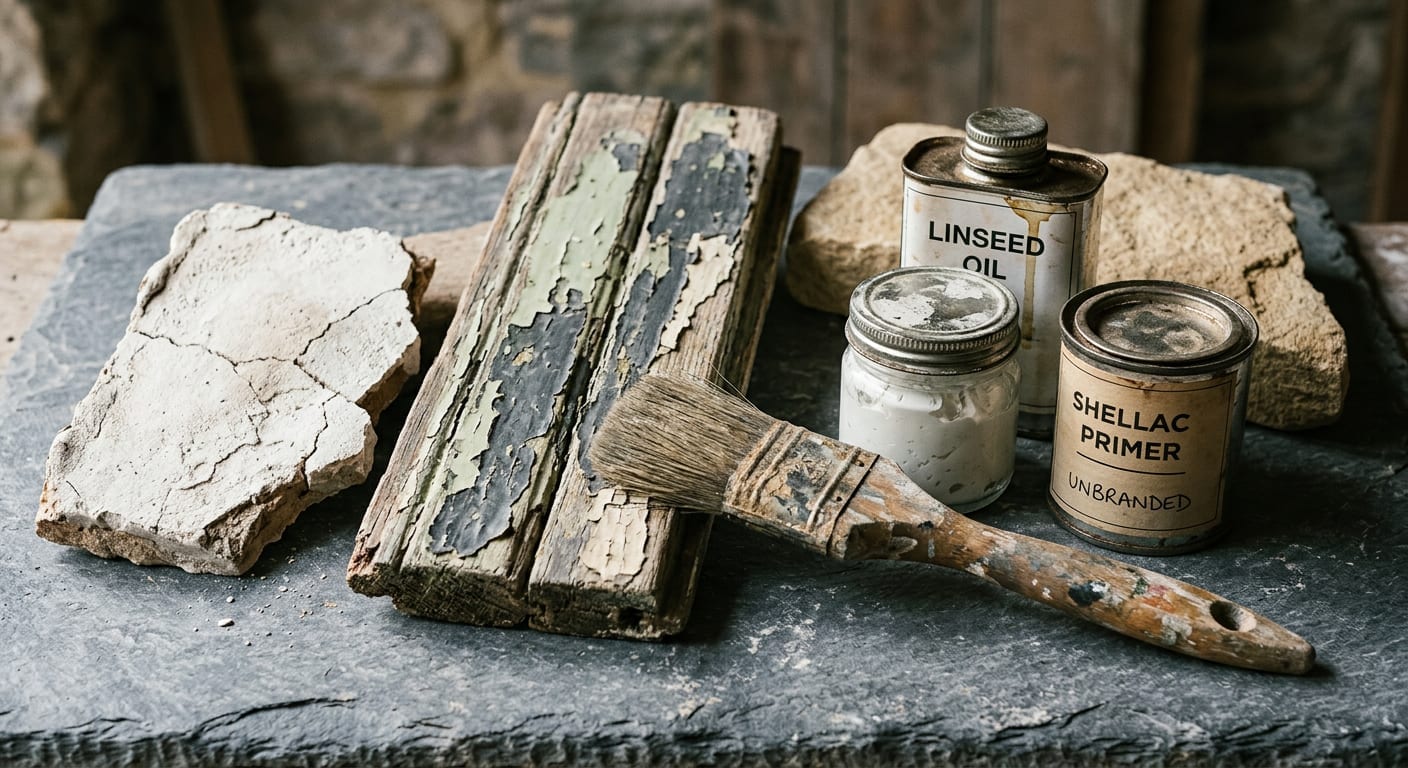
Old lime plaster, weathered sash timber with layered paint, sandstone, linseed oil and a worn bristle brush on slate

How sessions run

Learning with
your hands in it.

Sessions take place at your property, in a suitable local venue or on your commercial site. Every session is quoted in advance once the subject, group and location are agreed.

  • One to one at your home

    Learn on your own walls and woodwork, with the problems you actually have. Ideal before you start a project yourself.

  • Small groups

    Friends, neighbours or community groups learning together around a workbench, with time for everyone to practise.

  • Teams and property managers

    Practical sessions for maintenance teams, landlords and organisations responsible for commercial or rented buildings.

Not ready for a session?

Start with the free guide library.

Twenty written and narrated guides on preparation, finishes and safer working, freely shared with no account required.

Knowledge is worth sharing

Hear about new dates
before anyone else.

Workshop dates, new modules and the occasional evening talk go to this list first. Tell us what you want to learn and we will shape the next sessions around the answers.
What would you like to learn?

You will hear first when a new session or open workshop date is announced, before it is published anywhere else.