The Paint Shelf · 24 paints, one honest description each
Every tin
has a job.
Emulsions, trim paints, breathable finishes, primers and the specialist tins at the end of the shelf. What each is for, what it will not do, and which one belongs on which wall of a Fife house.
No brand names. We describe the type so you can choose well from any shop.
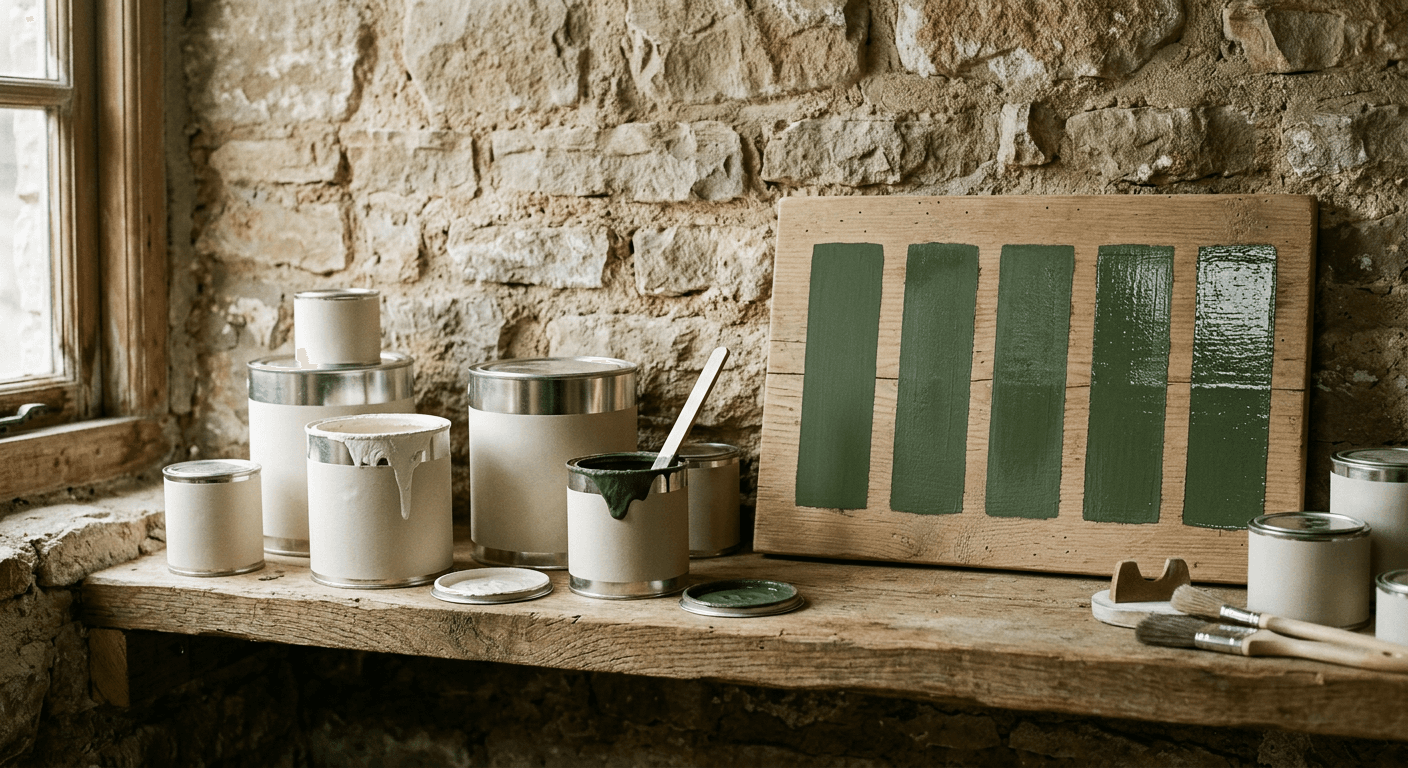
Sheen
Six levels
of shine.
Sheen is how much light comes back off the dried paint. It decides how cleanable a surface is, how much it forgives, and how the colour reads. Tap each level.
- Reflects
- 3 to 10 percent
- Reads as
- Still soft, a little more depth than flat
- Hides
- Hides most filling and texture
- Cleans
- Modern durable matts wipe surprisingly well
- Suits
- Most walls in most rooms
Sheen and light in Scottish rooms
Why the same colour
is three colours here.
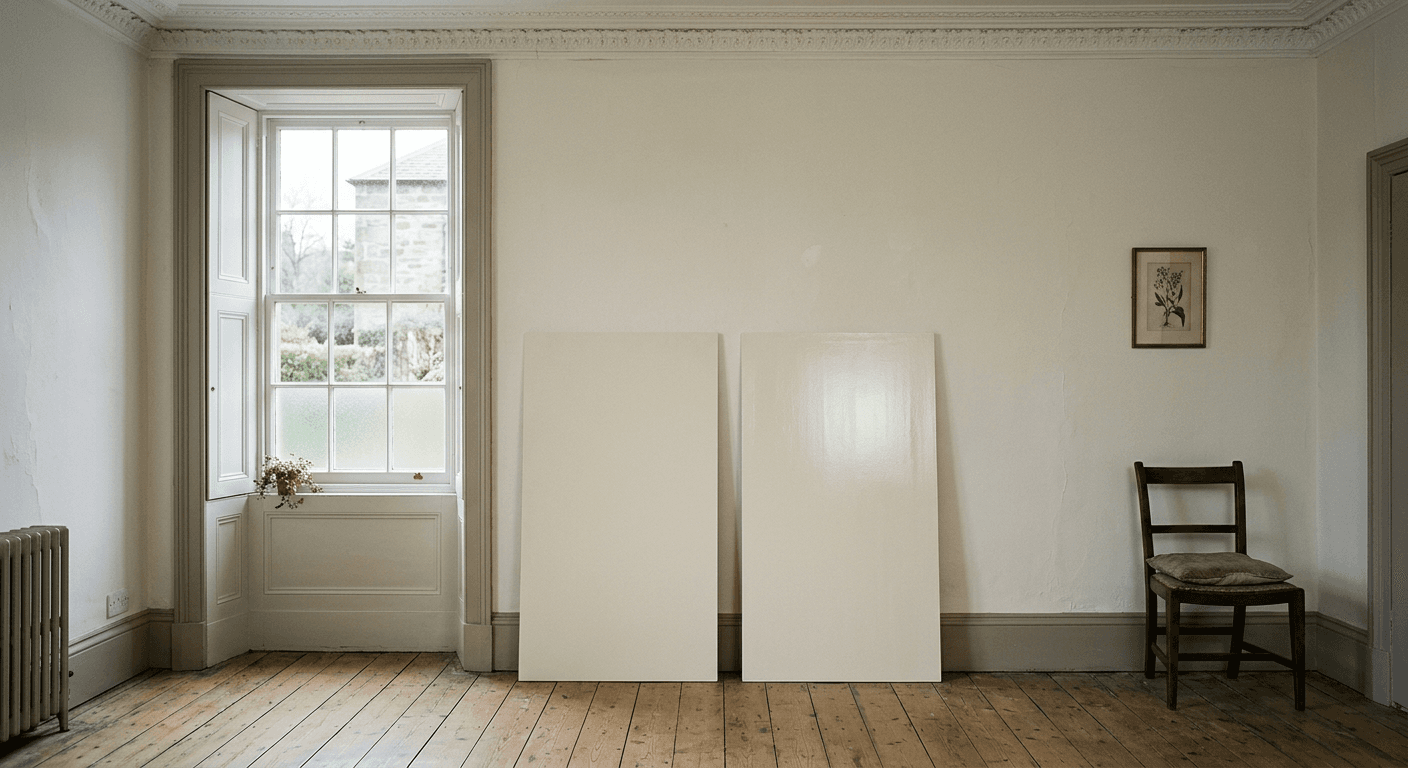
Fife light is low, grey and changeable, and a north facing St Andrews sitting room is a different country from a south facing Anstruther kitchen. Colour charts are printed for shops. This is how to read one for your room.
- North facing rooms
- Cool, steady, bluish light all day. Off whites go grey and greys go blue. Choose colours with a little warmth in them, yellow or red in the undertone, and a whisper more sheen than you think, because a soft eggshell bounces what little light there is.
- South facing rooms
- Warm, strong light that changes through the day. Colours read lighter and yellower at noon. Cooler undertones balance this; a green grey that looks cold on the chart can be exactly right. Full matt suits the sun because it does not glare.
- East and west
- East rooms are bright and cool in the morning and flat by afternoon. West rooms are dull until the afternoon and then glow orange. Test colours at the time you actually use the room, not when the sample arrives.
- Deep Victorian rooms
- Tall windows on one wall, darkness at the back. The wall opposite the window gets the light; the window wall itself is always in shadow and reads darker in the same colour. Some decorators mix a slightly lighter tint for the window wall. We would rather choose a colour that can carry both.
- Sheen changes colour
- The same tin in matt and eggshell will not match. Higher sheen reflects more white light back, so the colour looks lighter and cooler. If walls are matt and woodwork is eggshell in the same colour, expect the woodwork to look a shade paler.
- How to test properly
- Paint two coats on A3 card or lining paper, not on the wall where the old colour bleeds into your eye. Move the boards around the room over a few days: the window wall, the dark corner, beside the floor. Look at them at breakfast and after dark with the lamps on. Then decide.
The shelves
24 paints,
each with a job.
Emulsions
- flatwater basedBreathable
Contract matt
A typically porous matt emulsion often specified for new plaster and ceilings. Binder content and performance vary. Use only where the maker approves the substrate and drying stage.
Wear. Low. Scuffs and burnishes. Expect to repaint sooner.
Reach for it
- First coats on suitable plaster, diluted only as the product specifies
- Ceilings that nobody leans on
- Landlord turnarounds where cost matters more than wear
Leave it on the shelf
- Anywhere hands, bags or dogs pass
- Kitchens and bathrooms
- A finish coat you want to keep for years
From the bench. Never use vinyl matt as a mist coat on new plaster. Contract matt soaks in and bonds; vinyl sits on the surface and can peel off in sheets.
- mattwater based
Vinyl matt
The standard wall paint of the last forty years. The vinyl binder gives it a wipeable skin and a soft finish. Fine on modern plasterboard, a mistake on old lime.
Wear. Moderate. Cleans with a damp cloth, may shine where rubbed.
Reach for it
- Plasterboard and gypsum walls in dry rooms
- Living rooms, bedrooms, hallways
Leave it on the shelf
- Lime plaster or stone walls in old houses, where it traps moisture and lifts
- Bathrooms without an extractor
- Ceilings with existing distemper
From the bench. Two full coats, rolled in one direction and laid off the same way, is the difference between a wall and a patchwork.
- mattwater based
Durable or scrubbable matt
A matt emulsion with a much higher quality binder so it stays matt when scrubbed. The modern answer to wanting a chalky look in a busy hallway.
Wear. High. Takes a scrub without polishing.
Reach for it
- Hallways, stairs and children’s rooms
- Kitchens where you want a matt wall
- Dark colours that would otherwise burnish
Leave it on the shelf
- Old breathable walls
- Bare plaster without a mist coat first
From the bench. Give it its full cure time, usually two to four weeks, before you wash it. It is tough once cured and tender before.
- eggshellwater based
Kitchen and bathroom emulsion
A soft sheen emulsion with a mould inhibiting additive and a tighter film that resists steam. It does not stop condensation, it only survives it.
Wear. High, wipes clean, resists steam marks.
Reach for it
- Bathroom and kitchen walls and ceilings
- Utility rooms
Leave it on the shelf
- Rooms with a mould problem you have not fixed. Sort ventilation first
- Period rooms where the sheen looks wrong
From the bench. Paint the ceiling in this too. Bathroom ceilings are where the mould starts and a matt ceiling paint will not cope.
- flatwater basedBreathable
Ceiling paint
A very flat, high opacity white made to go on thick without dripping and to hide the joins. Usually goes on slightly tinted and dries pure white so you can see where you have been.
Wear. Low but ceilings rarely get touched.
Reach for it
- Any ceiling that is sound and dry
- Hiding minor patching and roller texture
Leave it on the shelf
- Walls, it marks too easily
- Ceilings with old distemper or nicotine staining without a sealer first
From the bench. Cut in along the wall line with a brush first, then roll toward the light coming from the window so lap marks fall in shadow.
Trim paints
- eggshellwater based
Water based eggshell
The everyday trim paint now: low odour, non yellowing, touch dry in an hour. Softer than oil for the first month, then very good.
Wear. Good once fully cured. Resists yellowing indefinitely.
Reach for it
- Skirtings, architraves, doors and window boards inside
- Panelling and fitted furniture
- Radiators once cool
Leave it on the shelf
- Exterior joinery unless the tin says so
- Going straight over old gloss without abrading and an adhesion primer
From the bench. Work quickly and do not go back into it. Water based trim paints skin fast and dragging a brush through half dry paint leaves tramlines.
- eggshelloil based
Oil based eggshell
The traditional trim paint. Flows out beautifully, hides brush marks, hardens to a shell. Yellows in rooms without daylight and smells for days.
Wear. Excellent hardness, the yellowing is the only weakness.
Reach for it
- Period woodwork where flow matters more than speed
- Dark colours where brush marks would show in water based
- Well lit rooms
Leave it on the shelf
- White in a windowless hallway or behind furniture, it will go cream
- Anyone sleeping in the room that night
From the bench. Thin the first coat slightly, let each coat harden a full day and sand with fine paper between. Three thin coats beat two thick ones every time.
- satineither based
Satinwood
A step up in sheen from eggshell. Cleaner, harder, more reflective. It shows every dent in old skirting so it suits newer joinery best.
Wear. Very good, easily wiped.
Reach for it
- Modern doors and skirtings
- Kitchens and bathrooms trim
- Homes with young children
Leave it on the shelf
- Old, battered woodwork you cannot fill perfectly
- Rooms where you want a soft period feel
From the bench. Satin exaggerates a poor undercoat. Fill, sand and undercoat as if you were glossing, then the satin will look like glass.
- glosseither based
Gloss
The traditional finish for windows, doors and railings. Oil gloss sheds water and lasts outside; water based gloss stays white inside but never quite reaches the same shine.
Wear. Highest of all trim paints outside when applied on a proper primer and undercoat.
Reach for it
- Exterior windows, doors and fascias in oil
- Front doors
- Cast iron railings and gates
- Traditional interiors
Leave it on the shelf
- Walls
- Timber with any movement or damp still in it, it will blister
- Rooms where a modern soft look is wanted
From the bench. Gloss is only as good as the undercoat beneath it. A well sanded, full undercoat gives gloss its depth. Skimping there is why cheap gloss jobs look thin.
- varieseither basedBreathable
Exterior woodstain and translucent finishes
Coloured, water repellent finishes that show the grain. Microporous, so they let moisture out, and they weather by fading rather than flaking.
Wear. Fades gracefully. Recoat every two to four years with a wash and a light sand, no stripping.
Reach for it
- Cladding, garden buildings, fences, pergolas
- Hardwood doors you want to keep looking like wood
Leave it on the shelf
- Previously painted timber
- Sills and horizontal surfaces that hold water, they need a paint system
From the bench. Coat the end grain twice. That is where the water gets in and where every fence starts to go.
Mineral and breathable
- flatlime basedBreathable
Limewash
Slaked lime and water, sometimes with earth pigment. It soaks into lime plaster or stone and becomes part of it. Soft, cloudy, luminous, and completely breathable. Fife has used it for four hundred years.
Wear. Weathers gently, refreshed every five to ten years outside with a thin coat. Marks inside but is easily recoated.
Reach for it
- Harled and lime rendered exteriors
- Bare lime plaster inside
- Stone and brick that has never been painted with anything plastic
Leave it on the shelf
- Plasterboard, gypsum or previously emulsioned walls, it has nothing to bite into
- Anyone expecting a perfectly flat, even colour
From the bench. Dampen the wall first and apply thin, almost like dirty water, with a big soft brush in a random figure of eight. Four thin coats look like cloud. One thick coat looks like a whitewashed shed and will craze.
- flatwater basedBreathable
Clay paint
A very flat, very soft paint bound with clay and natural binders. Breathable, no plastic, deep matte colour with a texture you can feel. More forgiving than limewash on modern surfaces.
Wear. Low to moderate. It marks but touches up invisibly, which most paints do not.
Reach for it
- Interior walls in old houses where you want breathability and a flat finish
- Bedrooms and living rooms on lime or gypsum plaster
- Covering previous emulsion where limewash cannot
Leave it on the shelf
- Bathrooms and kitchens
- Hallways that take knocks
- Woodwork
From the bench. Keep a jar of the leftover paint. Clay paint is one of the few finishes where a dab on a scuff disappears completely.
- flatmineral basedBreathable
Mineral silicate paint
Potassium silicate binder that chemically bonds with mineral surfaces. Very long lasting outside, fully breathable, resists algae, does not peel because it becomes part of the render.
Wear. Very high, fifteen to twenty years outside is normal.
Reach for it
- Lime and cement render exteriors
- Stone, brick and blockwork
- Old harled cottages where limewash maintenance is too frequent
Leave it on the shelf
- Timber, metal or plastic
- Over existing plastic masonry paint without a specialist primer
- Getting on glass or slate, it etches and cannot be removed
From the bench. Mask glass, slate and painted windows properly. Silicate paint splashed on a windowpane is there for good.
- mattwater based
Acrylic masonry paint
The standard exterior wall paint. A tough acrylic film, often with fine grit for texture and a fungicide. Waterproof from the outside, which is fine on cement render and a problem on lime.
Wear. Good, ten to fifteen years on sound render. Peels where damp is behind it.
Reach for it
- Cement rendered and pebbledash houses
- Modern blockwork and brick you want to change colour
- Concrete garden walls
Leave it on the shelf
- Lime harling or old stone walls, it traps moisture and blows the render
- Damp walls, it will peel within a year
From the bench. If you can see old flaking paint on a lime rendered Fife cottage, that is almost always acrylic masonry paint on top of lime. Do not add another coat. Strip back and go breathable.
Primers and undercoats
- flatwater basedBreathable
Mist coat
Not a product but a method: contract matt or a specific bare plaster paint thinned with water so it soaks into new plaster and seals it. Skip it and the finish coats peel like sunburn.
Wear. Not a finish coat.
Reach for it
- Any freshly skimmed or plastered wall or ceiling once fully dry
- Bare filler patches on a large scale
Leave it on the shelf
- Plaster that is still dark or damp in patches
- Old, previously painted walls, they do not need it
From the bench. New plaster is dry when it is uniformly pale pink with no dark patches, usually one week per five millimetres of thickness. Rushing this is the most common failure in new houses.
- flateither based
Wood primer
Bonds to bare timber and seals it so the undercoat and top coat have something to hold. Water based for interior softwood, oil based or aluminium for exterior and resinous timber.
Wear. Not a finish coat.
Reach for it
- Every bare patch of timber, however small
- New skirtings, architraves and doors
- Sanded through areas on old woodwork
Leave it on the shelf
- Over existing sound paint, use an undercoat there
- Knots, they need knotting solution first
From the bench. Prime the back of new skirting and the bottom edge of new doors before they go in. Nobody sees it and it doubles the life of the paint on the front.
- flateither based
Undercoat
A high build, high opacity coat that fills grain, hides colour change and gives the top coat a smooth level bed. Gloss without undercoat looks thin and shows every lap.
Wear. Not a finish coat.
Reach for it
- Under gloss, satin or eggshell on woodwork
- Changing from dark to light or light to dark
- Levelling out heavily sanded old paintwork
Leave it on the shelf
- Walls
- As a finish, it chalks and marks
From the bench. Buy undercoat tinted toward your top colour. Under a deep green door a grey undercoat saves a third coat of gloss.
- flatwater based
Adhesion primer
A primer that grips difficult surfaces: old gloss, melamine, uPVC, tiles, laminate, glass. The reason you can now paint a kitchen or a plastic window without it flaking.
Wear. Not a finish coat but the hinge on which the whole job hangs.
Reach for it
- Going water based over old oil gloss
- Kitchen cabinet doors, melamine wardrobes
- uPVC doors and windows, tiles, varnished timber
Leave it on the shelf
- Bare timber or plaster, use the right primer for those
- Chalky or flaking surfaces, it needs a sound base
From the bench. Degrease, abrade, dust, then prime. Adhesion primers grip well but they cannot grip through grease or dust.
- flateither based
Stain blocker
A sealer that stops water stains, nicotine, soot, tannin, ink and old damp marks bleeding through your fresh paint. Available in water, oil and shellac versions, and the stubborn stains need shellac.
Wear. Not a finish coat.
Reach for it
- Water stains on ceilings once the leak is fixed
- Nicotine yellowed rooms
- Knots and tannin bleed on pine
- Fire damaged or sooty surfaces
Leave it on the shelf
- Active damp, the stain will return
- The whole wall when a patch will do, unless nicotine
From the bench. Two coats of stain blocker on a nicotine ceiling, then paint. One coat and the yellow will ghost through in a fortnight.
- flatoil based
Metal primer
Zinc phosphate or red oxide primers that stop rust and bond to bare iron and steel. Cast iron railings, gates, gutters and radiators all start here.
Wear. Not a finish coat.
Reach for it
- Bare or rusted iron and steel once the loose rust is removed
- Cast iron rainwater goods
- Radiators that have been stripped
Leave it on the shelf
- Galvanised or aluminium, they need an etch or mordant primer
- Over rust you have not removed
From the bench. Feed the primer into every joint and back edge of railings with a fitch. Rust starts where you cannot see, so paint where you cannot see.
Specialist
- satineither based
Floor paint
A hard wearing, flexible paint formulated to take foot traffic. Two pack epoxies for garages, single pack acrylics or polyurethanes for boards inside.
Wear. Good but every floor paint eventually shows wear at doorways. Plan to recoat in five to eight years.
Reach for it
- Painted floorboards in bedrooms and halls
- Concrete garage and utility floors
- Stair treads
Leave it on the shelf
- Floors with underfloor heating unless the tin says so
- Over wax or oil finishes without stripping
From the bench. Three thin coats, then leave it a full week before rugs and furniture go back. Floor paint is walkable in a day and truly hard in a week.
- flatwater based
Chalk and furniture paint
A thick, very matt paint that grips most surfaces without much preparation and is made to be waxed or lacquered. Forgiving to apply, soft until sealed.
Wear. Low unsealed, moderate with wax, good with a lacquer.
Reach for it
- Furniture, dressers, freestanding pieces
- A quick transformation on something you are not precious about
Leave it on the shelf
- Skirtings, doors or kitchens that take real wear, it is too soft
- Anything you do not intend to wax or seal
From the bench. Wax looks lovely for a year and then needs redoing. A water based lacquer over chalk paint lasts far longer on anything with drawers.
- mattwater based
Anti condensation and thermal paint
Emulsion with hollow glass beads or a thick insulating film to keep the surface slightly warmer so condensation forms less readily. A help at the margins, not a cure.
Wear. Moderate.
Reach for it
- Cold external walls behind wardrobes
- Bathroom ceilings once ventilation is improved
- Cold bedroom corners in stone houses
Leave it on the shelf
- Solving a mould problem on its own
- Walls with penetrating damp
From the bench. Fix the airflow first: extractor, trickle vents, furniture off the wall. Then this paint can hold the line.
- satineither based
Radiator enamel
A heat resistant trim paint that will not yellow or soften on a warm radiator. Most quality water based satinwood now says it is suitable, but check.
Wear. Good. Takes a fortnight to fully harden, keep the heating off or low.
Reach for it
- Radiators and pipework
- Painting radiators to match the wall so they disappear
Leave it on the shelf
- Hot radiators, always paint them cold
- Behind the radiator where a roller on a stick and wall paint is better
From the bench. Take the radiator off the wall if you can. Painting it flat on a sheet takes half the time and the back gets done too.
Showing 24 of 24.
Which paint on which surface
The matrix
we would pin to the van door.
| Surface | Use | Avoid | Note |
|---|---|---|---|
| New plaster or skim | Mist coat of contract matt, then two coats of matt or durable matt | Vinyl matt straight on, any trim paint | Wait until uniformly pale and dry, then never rush the mist coat. |
| Plasterboard, dry rooms | Vinyl matt or durable matt | Limewash | Seal joints and filler with a thinned first coat so they do not flash. |
| Old lime plaster or stone inside | Clay paint, limewash on bare lime, breathable mineral paints | Vinyl matt, kitchen and bathroom emulsion | If it has already had vinyl and is sound, clay paint will go over it. If the vinyl is lifting, it must come off. |
| Kitchen or bathroom walls and ceilings | Kitchen and bathroom emulsion or durable matt | Contract matt, ceiling paint, clay paint | Ventilation does more than paint ever will. |
| Interior softwood, bare | Knotting, wood primer, undercoat, then eggshell or satin | Any top coat straight onto bare wood | Prime the hidden edges too. |
| Interior woodwork, old gloss | Degrease, sand, adhesion primer, then water based eggshell or satin | Water based paint directly over unsanded gloss | Test old paint on pre 1970 joinery for lead before dry sanding. |
| Exterior joinery | Oil primer, undercoat, two coats oil gloss, or a full exterior water based system | Interior eggshell, chalk paint | Sills and bottom rails fail first. Give them an extra coat. |
| Lime harled or lime rendered exterior | Limewash or mineral silicate paint | Acrylic masonry paint | This is the most common expensive mistake on Fife cottages. |
| Cement render or pebbledash | Acrylic masonry paint or mineral silicate | Limewash, it will not bond | Treat algae and wash down properly first. |
| Cast iron railings and gutters | Remove rust, metal primer, undercoat, oil gloss | Emulsion, water based paint on bare iron | Paint the backs and undersides as carefully as the fronts. |
| uPVC, melamine, tiles | Degrease, abrade, adhesion primer, then satin or eggshell | Any paint straight on | Dark colours on uPVC in full sun can warp the plastic. Stay mid tone or lighter. |
| Floorboards | Floor paint, three thin coats | Wall or trim paint | A full week to harden before furniture. |
Asked at the counter
Questions
about paint.
- What is the difference between matt, eggshell and satin?
- Sheen, which is how much light bounces back. Matt reflects very little and hides imperfections, eggshell has a soft glow and wipes clean, satin has a clear soft shine and shows more of the surface beneath. The higher the sheen, the more cleanable and the less forgiving of poor preparation.
- Can I put emulsion on the walls of an old stone house?
- You can, and most people have, but it is often the reason the paint is peeling. Old lime plaster needs to breathe. Vinyl emulsion forms a plastic skin that traps moisture behind it. Clay paint, limewash on bare lime, or a breathable mineral paint will last far longer and keep the wall healthy.
- Why does white gloss go yellow?
- Oil based paints yellow as the oil oxidises, and they do it fastest in rooms without daylight. Water based trim paints do not yellow. If you want pure white on woodwork in a dim hallway or behind furniture, choose water based.
- Do I really need a mist coat on new plaster?
- Yes. Bare plaster is thirsty and will suck the water out of a full strength paint before it can bond, so it dries as a skin that peels. A thinned first coat of contract matt soaks in and seals it. This is not optional.
- What paint should I use on a lime harled cottage outside?
- Limewash if you are happy with a soft, slightly cloudy finish and a thin recoat every few years, or mineral silicate paint if you want a flatter, longer lasting finish. Not acrylic masonry paint. That is the coating peeling off half the harled cottages in the East Neuk.
- Is expensive paint worth it?
- Usually. The difference is mostly in the amount and quality of pigment and binder. Better paint covers in fewer coats, holds colour longer, cleans better and is easier to apply. The paint is rarely the biggest cost on a job; labour is, and good paint saves labour.
Now the amounts
Tins counted,
weather checked.
The paint calculator turns your room into litres and a rough cost. Painting Weather tells you if the week is any good for outside work. The colour service is there if you would rather we chose with you.
One paint, one surface, one small correction in each letter.